Professional · Head language
Rational, fact-based language. Head communication, analytical reports, structured thinking.
View all Secrets 1–5 →Personal · Heart language
Relationship-based language. Team roles, personal chemistry, and group dynamics.
View all Secrets 6–10 →Private · Gut + Body · Archetypal
Intuitive, trust-based language. Ethics, life areas, creativity, wisdom management.
View all Secrets 11–15 →Professional · Head language
Rational, fact-based language. Head communication, analytical reports, structured thinking.
View the full group →Personal · Heart language
Relationship-based language. Team roles, personal chemistry and group dynamics.
View the full group →Private · Gut + Body · Archetypal
Intuitive, trust-based language. Ethics, life areas, creativity and wisdom management.
View the full group →Interactive tests
Where the colour codes are put to work: the interactive tests, the Key-Index and the Pyramid test.
View the full group →Lesson 2,2 · Communication · Focus — Flow and Secrets
Change rarely fails because the plan was wrong. It fails because nobody asked what is actually true right now. Three questions, and one small experiment, to find out.
Here-and-now
Your inner voice can be a guide or a supervisor. Learn to tell which one is speaking.
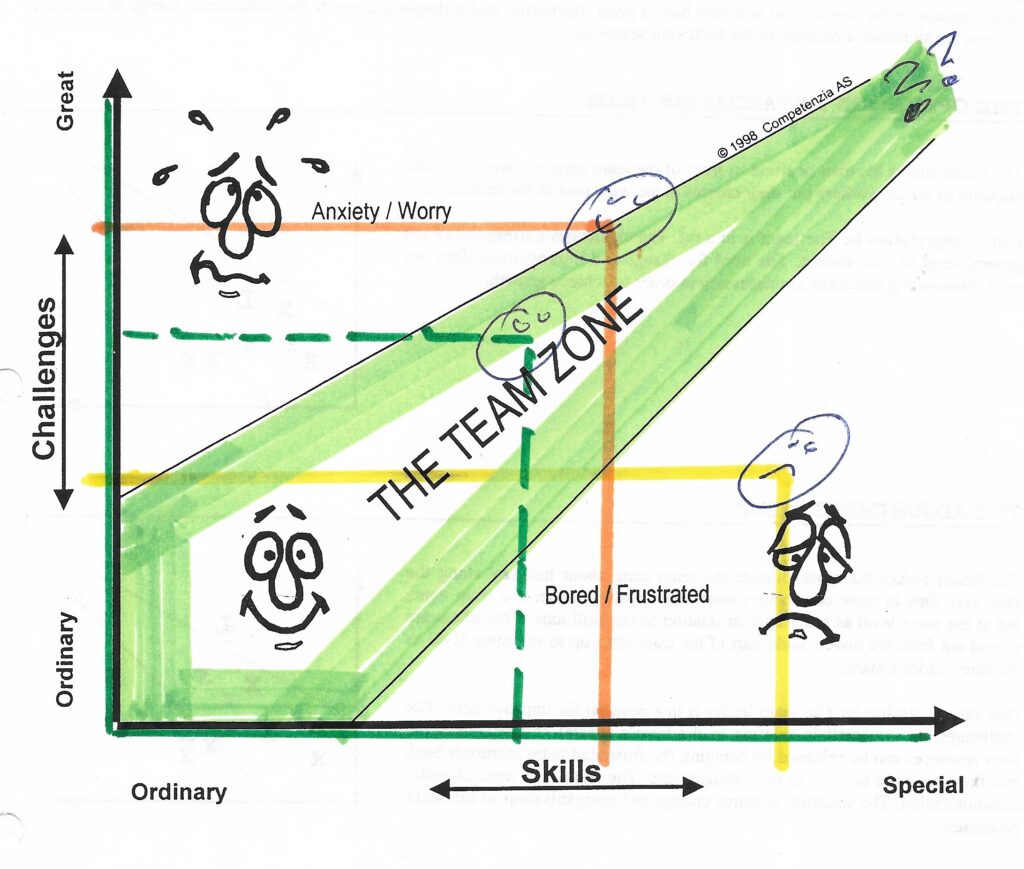
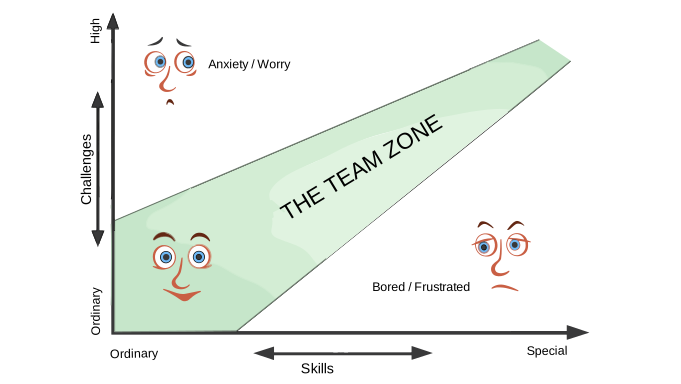
Most people try to solve a stress-zone or boredom-zone task by pushing harder or planning further ahead. SGL asks you to slow down first, and answer three questions in order.
After each one, tag which voice answered — Guide (curious, asks a question) or Supervisor (checks, corrects).
Where am I, right now? Not where you meant to be, not where the plan says you should be — the actual position on the chart, today.
What is actually being asked of me? Separate the real demand from the one you have added yourself, out of habit or fear.
What is the smallest true step? Not the whole plan — one honest move you could make before the day is over.
Mark each question above as Guide or Supervisor once you have checked in with yourself.
Try this now
Wherever you are right now, sit still for one minute and simply listen to the voice that comments on what you are doing. Most of us carry two of them. One sounds like a supervisor: it checks, corrects, and rarely says anything is good enough. The other sounds like a guide: it notices, asks a real question, and waits for an answer.
You cannot silence either voice, and you should not try. But you can learn to recognise which one is speaking before you act on it. The supervisor pushes you straight back into stress or boredom. The guide is the one that can actually walk you into flow.
We have coached hundreds of people through change, and the ones who move fastest are rarely the ones with the best plan. They are the ones who stopped arguing with their own inner voice long enough to hear what it was actually saying.
The SGL coaches
That is the whole secret behind Flow and Secrets: not a technique for managing change from the outside, but a habit of checking in with yourself from the inside, here and now, before the next task begins.
Your turn
For one full day, notice the voice each time you start or finish a task. Ask yourself the three questions above, out loud if you can, and jot down one line each time:
Bring your notes with you into 2,3, where the same voice gets a whole team to listen to.
Next lesson